How to Choose a Private Tour That Fits Your Barcelona Plans
Choosing a private tour in Barcelona is less about finding the biggest list of sights and more about matching the day to the way you want to move through the city. Barcelona rewards unhurried time. A lane in the Gothic Quarter can be rich in detail, a viewpoint in Montjuïc can change the shape of the afternoon, and a short stop near Sagrada Familia can feel very different depending on when you arrive. The right plan gives those moments room without leaving you with long gaps or rushed transfers.
The process is straightforward when you work in the right order. Start with the purpose of the day, then set the route, timing, access, and practical limits. Only after that should you compare individual tours. A good fit should feel calm on paper, not packed with too many promises.
Set the purpose before the itinerary
First decide what the day is meant to do. Some private tours are built around architecture, some around food, some around history, and some around getting a feel for different neighbourhoods. Barcelona can cover all of those themes, but trying to include each one often makes the day feel scattered.
Write the main aim in one plain sentence. For example, the day might be for understanding Gaudí, seeing the old city with context, finding quiet corners away from busy streets, or giving first-time visitors a clear sense of the city. That sentence becomes your filter. If a proposed route does not support it, the tour is probably not right even if the list of stops looks impressive.
Also think about the people taking part. A route that suits adults with a strong interest in design may be tiring for children. A walking-heavy day may not suit someone who needs frequent stops. A tour focused on markets and tasting may not work for people with dietary restrictions. The aim is not to remove all spontaneity, but to choose a structure that fits the group.
Choose a small set of places, not a crowded list
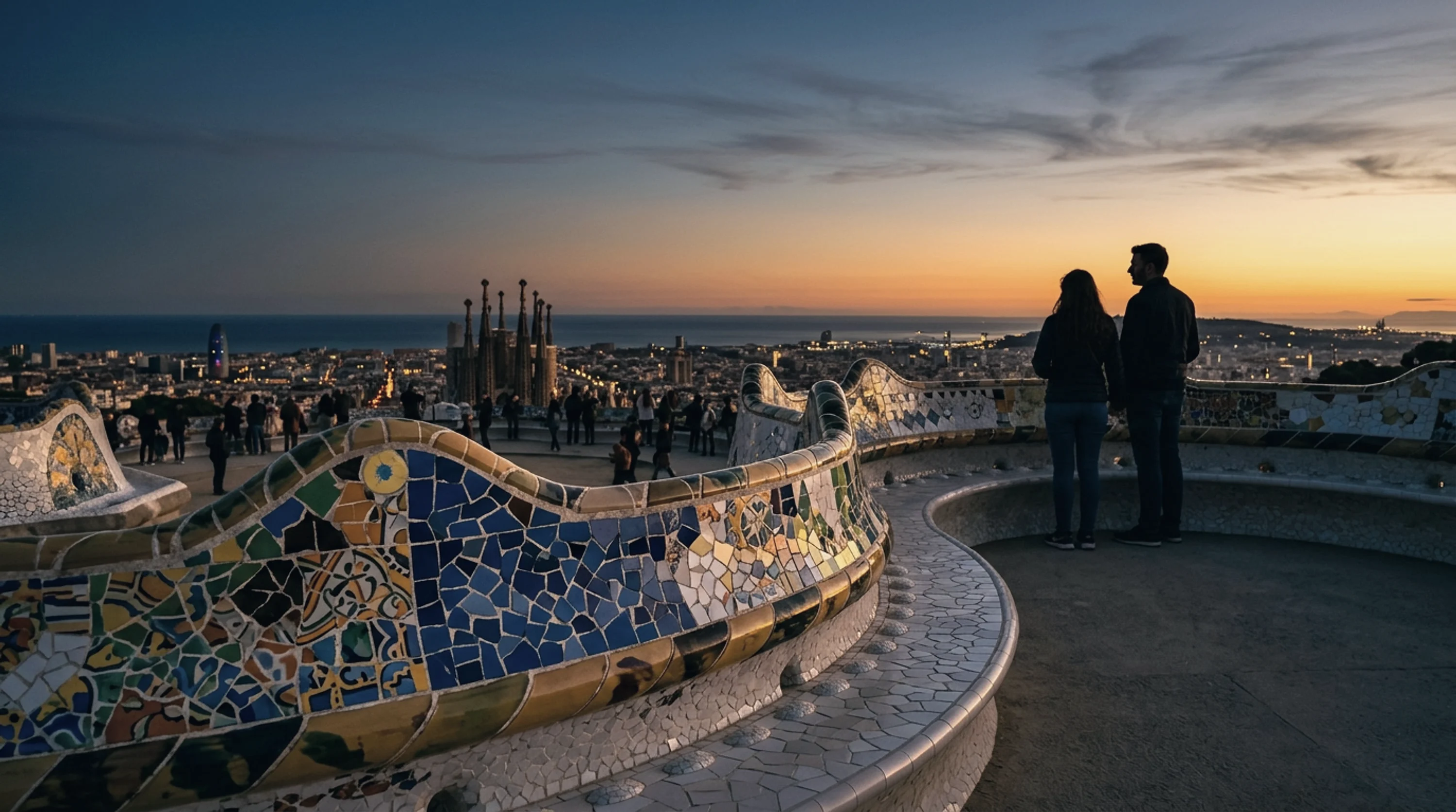
Once the purpose is clear, pick the places that deserve the most attention. Barcelona is compact in some ways and surprisingly spread out in others. Crossing from the Gothic Quarter to Park Güell, then to Montjuïc, can involve a lot of movement. That may be fine if transport is part of the plan, but it can eat into the time available for looking, listening, and asking questions.
A focused route usually works better. If the main interest is Gaudí, Sagrada Familia and Casa Batlló can sit naturally in the same day, with Park Güell added only if the group has the energy and the timing works. If the interest is older Barcelona, Barcelona Cathedral, Museu Picasso, and the lanes of the Gothic Quarter can form a coherent route. If food is the theme, La Boqueria Market may pair well with nearby streets rather than a distant second district.
At this stage, watch for routes that sound generous but leave little time at each stop. Ask how long is planned at each place, not just which places are included. A site with a detailed interior often needs more time than a square or an exterior viewpoint. Entry lines, security checks, and slow lifts can also shape the day.
Fix the timing around energy and access
Next, decide when the tour should begin and how long it should last. Morning light, midday crowds, and evening atmosphere all change the city. Popular landmarks can feel very different early in the day compared with the middle of the afternoon. A route that includes indoor visits may need to respect ticket times, while a walking route through neighbourhoods can be more flexible.
Think in blocks rather than hours alone. A comfortable private tour often has an opening stretch, a pause, and a final section. The pause might be a café stop, a quiet square, or simply time to sit. This matters in Barcelona because streets can be busy, pavements can be uneven, and heat can make steady walking harder than expected.
Access is part of timing too. Check whether the route includes stairs, steep streets, cobblestones, long walks between stops, or sites with restricted entry for large groups. Some places have rules about bags, photography, or entrance at set times. A private format can help with pacing, but it does not remove the physical features of the city. Be honest about mobility needs before the day is settled.
Compare the language, style, and level of detail
The quality of a tour depends heavily on how the guiding is delivered. A knowledgeable explanation can bring a building or street to life, while a dense lecture can drain attention. Think about the style your group prefers. Some people want a clear story with dates and names. Others want conversation, context, and space to notice details on their own.
Check the language of the tour and whether questions are welcome. If the group includes different ages or levels of familiarity, a flexible approach is usually more useful than a fixed script. Ask how the guide handles quieter participants, children, or people who want extra time at a particular stop. The answer can reveal a lot about the shape of the day.
When comparing options, it helps to keep notes in the same format for each one. A name such as privatetourinbarcelona.com may appear while you are researching, but the decision should still rest on the same practical points: route, timing, guiding style, and fit with the group. Clear comparisons prevent a polished description from hiding a poor match.
Check what is included and what is left open
After the route and style are settled, look closely at the practical details. This is where a promising tour can become confusing. Check whether entrance tickets are included, whether reservations are made in advance, and what happens if a site is closed on the chosen day. Some attractions have limited access at certain times, and a change in schedule may require a different order of stops.
Also clarify the meeting point and the end point. In a city where traffic and one-way streets affect movement, the start and finish can shape the whole experience. A tour beginning near a major landmark may be easy to find but busy at the meeting hour. A quieter meeting point may be calmer but harder to locate without clear directions. Make sure everyone knows where to go and what to look for.
Ask about group size, walking distance, and whether transport is part of the plan. If taxis, metro, or other transport are used, confirm who arranges it and how transfers are handled. For a day including Montjuïc or Park Güell, this can make the difference between a smooth route and a tiring one. If the tour ends away from where you are staying, check how easy it is to continue on your own.
Read the small print with a practical eye
Before committing, review the terms in calm detail. Look for the rules on changes, cancellations, late arrival, and missed entry times. These details are not exciting, but they matter when tickets, timings, and multiple people are involved. A clear policy is easier to work with than vague wording.
Pay attention to what the tour does not promise as well as what it does. A route may mention a famous landmark without guaranteeing entry inside. A food-focused walk may include tastings that do not cover every dietary need. A tour through the Gothic Quarter may pass by a site without stopping for a full visit. None of this is a problem if it is clear from the start.
If something is unclear, ask before booking rather than assuming. Phrase the question narrowly. Instead of asking whether the day is suitable, ask whether there are steps at a specific stop, whether the route includes a rest break, or whether entry to a named site is included. Specific questions get specific answers.
Match the final choice to the day you actually want
By the end, the best option should be the one that fits the purpose you wrote at the beginning. A strong private tour in Barcelona does not need to cover everything. It needs to make the chosen places feel connected, give the group enough time, and avoid unnecessary strain. A shorter route with room to look around will often beat a full day spent moving between famous names.
Trust the practical signs. A clear route, sensible timing, honest access notes, and a guiding style that suits the group are more useful than a long list of highlights. When those pieces line up, the day has a better chance of feeling easy from the first stop to the last.